


Review: Finding My ‘Dha’
- Sep 24, 2025
- 3 min read
making space to be many things at once by Bhumi B Patel
The promises of immigration are often safety, wealth, prosperity, and stability, and historically these narratives have focused on hardships that, with the determination and grit of the immigrant spirit, can be overcome. But sometimes these stories miss the nuances and intricacies of the journey rooted in feelings of too-much-difference and not-enough-ness.
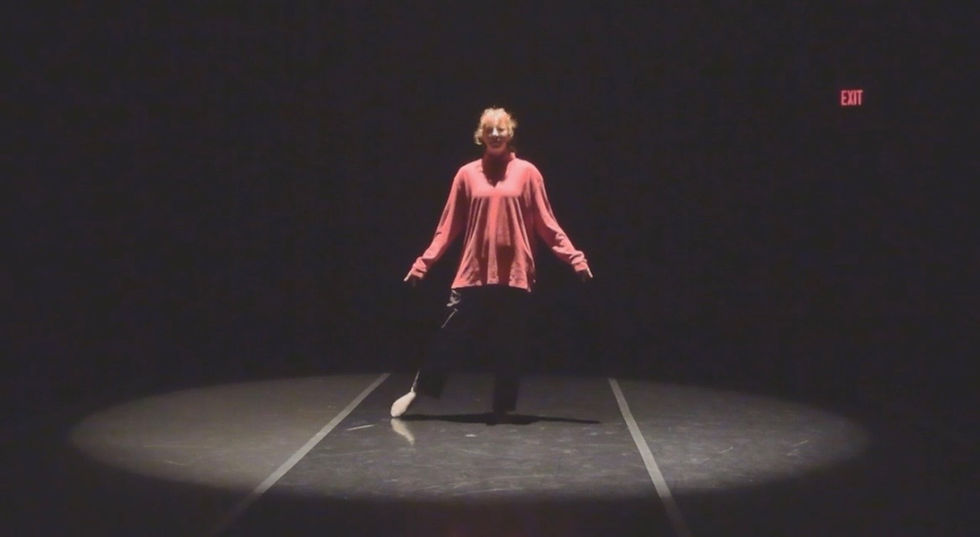
Monsoon Dance Company, directed by Karishma Sharma, premiered Finding My ‘Dha’ at ODC Theater September 19-21, 2025. This performance work was an exploration of the unique feelings that come along with trying to shape one’s own multi-cultural identity. Promotional materials for the show explain that “Dha” is a rhythmic element rooted in Kathak dance and music, the form of dance that Sharma has performed in for much of her career. But the “Dha” of the title invokes more. It is a journey through self-discovery of how to be both a Kathak dancer and a contemporary dancer, thus a deeper understanding of how to be both South Asian and American. In one scene, Sharma questions a ballet teacher (played by Company Artist Maxine Flasher-Düzgüneş) who says that ballet is the foundation of all forms of dance, even while Sharma explains that she never had to take ballet to study jazz in India. In another scene, Sharma and her daughter playfully tussle with what they will listen to on the radio in the car - American pop music, or Bollywood music. In yet another scene, created from a memory of a trip to India, Sharma is teased at Navratri by a friend as being an “NRI” which is both a “non-resident Indian” and a “never-returning Indian.” Each of these moments asked us, the audience, to witness the push and pull of trying to both hold on to one’s cultural identity and assimilate into one’s place of residence.

We are taken through this journey by Sharma along with Company Artists Ruchi Gupta, Poonam Singh, and Maxine Flasher-Düzgüneş, and Dancers Zara Mehta and Ayesha Mehta (Sharma’s daughters) who dance through sections that are in turns heartfelt, funny, emotional, and triumphant. Through fifteen short sections, the artists play many characters and move through the space utilizing vocabularies from Kathak, Garba, release technique, and jazz. The company arrived at the final section, titled “Integration,” in which the choreography shifts through all of these forms, the dancers charge through the space, and the audience is encouraged to see the dancers, but especially Sharma, in all of the forms that make up her dance training, and her very identity.
As I watched the work, I wondered how each of the dancers experienced their own liminalities and identities and I wondered about the conceptualization of contemporary. In her 2017 article, SanSan Kwan aptly asks us “When Is Contemporary Dance?” to grapple with the ways that contemporary can “connote a temporal designation” but it can also relate to “a series of aesthetic preoccupations” and is often “dominated by Euro-American artists” (Kwan 2017). Contemporary dance is fraught with exclusionary practices, narrow aesthetic considerations, and often limited political positionings. So then, when artists who exist at an intersection of identities take up the term contemporary, what gets highlighted? What gets left out? In this piece, I see Sharma grappling with this very conundrum throughout.
Ultimately, I think that this piece thrives in a third space, to borrow from Homi Bhabha, as many works created by diasporic, minoritarian subjects do. It is neither here, nor there. It is both and neither. And it is certainly not equal parts. But it is a space of possibility, and for Sharma, in Finding My ‘Dha’ , we are privy to the journey of finding how one can be many things all at once, belonging to oneself above belonging to training, movement form, or even nation. This piece allows us a glimpse into what it means to defy categorization and be proud of our multiplicity.


Comments