


Review: Denice Frohman's "Esto No Tiene Nombre"
- 4 days ago
- 3 min read
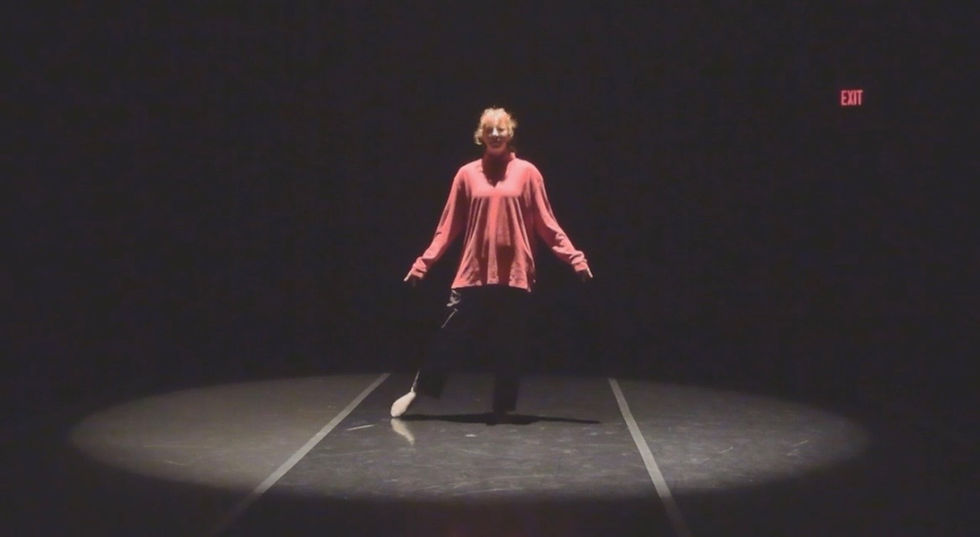
A couple of weeks ago, I attended Denice Frohman’s Esto No Tiene Nombre at the YBCA Forum, and from the moment I walked in, I was captivated. The set design was a gorgeous aesthetic of excess, as theorized by Jillian Hernandez. There’s a white door upstage, file boxes stacked on shelves in states of disarray, a chalkboard upon the wall. There’s an armchair and a desk and a projection screen, and an old school TV. Downstage left is a desktop computer, the screen shimmering that light black of being on but not awake. It was intimate. As Rosalia’s “Despecha” played through the space, I took it all in. The aesthetics of excess, as wielded by Frohman through this stage space, “embrace abundance where the political order would impose austerity upon the racialized poor and working class, viewed as excessive as in unnecessary, unproductive” in order to “flaunt the visuality of difference where the social order invests in the material erasure of Black and Latinx bodies through mass incarceration, detention, deportation, and other forms of social death” It presents the audience with a tender, personal, reclaimed rasquache, which we can think of rasquache as something that is “in bad taste or too frugal” or even “tacky.” Chicano cultural critic Tomás Ybarra-Frausto writes, “One is never rasquache, it is always someone else of a lower status who is judged outside of the demarcators of approved taste and decorum.” Rasquache is used to subjugate, and by reclaiming it, it becomes a political choice. Instead of tackiness, it represents the survival strategies of minority subjects, particularly queer women of color, to subvert the normative mode of telling historically shrouded stories.
If you’ve talked to me recently, you’ve probably heard me talk about the afterlives of the AIDS epidemic and its lasting impact on queer dance. You’ve also probably heard me bemoan the historical and archival hole where queer women of color dance artists should be. In Esto No Tiene Nombre, Frohman weaves together Latina lesbian elders’ oral histories with her own personal narrative to find a sense of belonging in this world. As the world of this piece unfolded before me, I held on to phrases and moments as utterances within these portraits of Latina lesbian elders. I’ve held on to the scrawl across the chalkboard that read “sensation before comprehension;” and the elder who said that “it’s one thing to have a history. It’s another thing to touch it;” and the act of defiance described in one of the oral histories: “When you’re told there’s nothing in the past, it’s an act of defiance to look back;” and the portrait of Frohman in her father’s clothing at age 6; and the “sea of Marias” who tricked harassing cops into believing all of them were named Maria; and the elder who would say to her late partner, “let’s do it again.” Each of these memories feels like an utterance, and when braided together as performative utterances, as theorized by JL Austin, they convey a neither truth nor falsehood, but rather, as José Esteban Muñoz writes, a “brown utterance…a particular mode of belonging-in-difference.” Even though I am not Latinx, I found a way to belong in my differences as a queer woman of color.
In a world that continues to perpetuate injustice, Frohman is captivating, humorous, irreverent, and vulnerable on stage as she leads us through her archival research and imagination to seek out belonging, to remember, and to reinscribe queer stories with love and lust, care and compassion, and silliness and heartbreak. If you have a chance to see this work, I would seize it. The skilled gracefulness with which Frohman moves the audience through varying emotional landscapes is profound, and I left the theater changed. This work made me want to grow old in this queer of color body, because as Frohman speaks in the Epilogue of the performance, “there is heaven for us.”

Notes:
“A lesson in ‘rasquachismo’ art: Chicano aesthetics and the ‘sensibilities of the barrio,’” Smithsonian, accessed September 5, 2024, https://www.si.edu/stories/lesson-rasquachismo-art.
Gonzalez, Irvin Manuel. “Dancing Quebradita: Transnational Belonging and Mexicanidades Across the U.S.- Mexico Border” (PhD diss., University of California, Riverside, 2021.
Hernandez, Jillian. Aesthetics of Excess: The Art and Politics of Black and Latina Embodiment. Duke University Press Books, 2020.
Muñoz, José Esteban. 2020. The Sense of Brown. Durham: Duke University Press.
Ybarra-Frausto, Tomás. “Rasquachismo: a Chicano sensibility,” in Chicano Aesthetics: Rasquachismo (MARS, Movimiento Artístico del Rio Salado, 1989).

Comments